
Water Hygiene Services
Water Hygiene Services
At Mawdsleys Pumps, we prioritise meeting your Water Hygiene requirements with professionalism and expertise.
Our accreditation under the national water hygiene scheme guarantees adherence to the highest standards and our engineers are all CSCS approved and fully competent in confined space entry.
Safety is important, which is why we conduct detailed Risk Assessments and secure all necessary permits before commencing any work. Following the procedures outlined in BS6700, all our undertakings align with ACop L8.
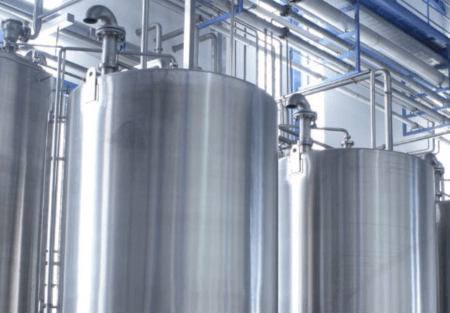
Legionella Testing & Tank Cleaning

Water Treatment
Services

Legionella Risk
Asessment


Why Mawdsleys Pumps
Speed of Service
When your pump fails, you need action—not promises. That’s why we respond fast, and fix it faster.

24/7 Support
Your pump doesn’t care what time it is when it breaks down. Neither do we. We operate 365 days a year.
Stellar on Google
Don't take what we say for granted. Check our Google Reviews for confirmation of the quality we bring.

Precise Communication
Our specialists will give you the full picture and keep you in the loop every step of the way.

Local coverage
We provide pump services to the South West and South Wales:
Bristol, Cardiff, Newport, Bath, Cheltenham, Gloucester, Weston-super-Mare, Bridgewater, Thornton, Exeter, Salisbury, Southampton, Reading, Swindon, Slough, Oxford, Basingstoke, Newbury, Worcester, Hereford, Yeovil
Accreditations


Water Hygiene FAQs
Yes. Under UK health and safety law (including the Health and Safety at Work Act 1974), any person in control of premises has a legal duty to identify and assess the risk of exposure to Legionella. This applies to all businesses, regardless of size, if a water system is present. It should be reviewed at least every two years or whenever there is a significant change to the water system
No, routine monthly sampling is not a legal requirement for most standard hot and cold water systems. Instead, the law requires regular monitoring of temperatures.
A Dead Leg is a length of pipe leading to an outlet that is rarely or never used (like a capped-off sink or a redundant toilet). Because the water inside doesn’t move, it stagnates, loses its temperature, and allows a biofilm (slimy bacterial colony) to grow.
Legionella bacteria thrive between 20°C and 45°C. To keep them dormant or kill them, you must follow the “Hot is Hot, Cold is Cold” rule:
Hot Water Storage: Must be stored at 60°C or higher.
Hot Water Distribution: Must reach outlets (taps/showers) at 50°C or higher within one minute.
Cold Water: Must be stored and distributed below 20°C.