Water pressure is an essential part of any building with a water supply, yet it’s often taken for granted until something goes wrong and the pressure drops. Low water pressure can be caused by a number of factors, such as high demand and can affect every water outlet in the premises, including toilets, showers, taps, pumps, washing machines, and water tanks.
Experiencing low water pressure is extremely frustrating for building users and in commercial and agricultural environments, can result in huge drops in efficiency due to the extra time taken to output water. Read our latest blog post to find out more about the causes of low water pressure and how you can improve your water pressure.
Steps To Improving Your Water Pressure
If you’ve noticed a drop in your water pressure, here are steps you can take to try and increase it once more:
- Check that the outlet for your water is not clogged up or blocked in any way
- Check that the water valves for your property are fully open
- Check for blockages in your water system
- Check for any leaks in your water system
- Ensure that your current pumping system meets your requirements
- Test your appliances at peak times vs quieter times to see if there is a difference in the water pressure you receive
- Invest in appliances such as power showers which can enable higher output even when overall pressure is lower
If you own the premises, you can take it upon yourself to check these or contact a professional if you do not have the expertise.
However, if you are a building user or rent a space in the building, it is likely that you will need to contact the landlord of the building to investigate further.
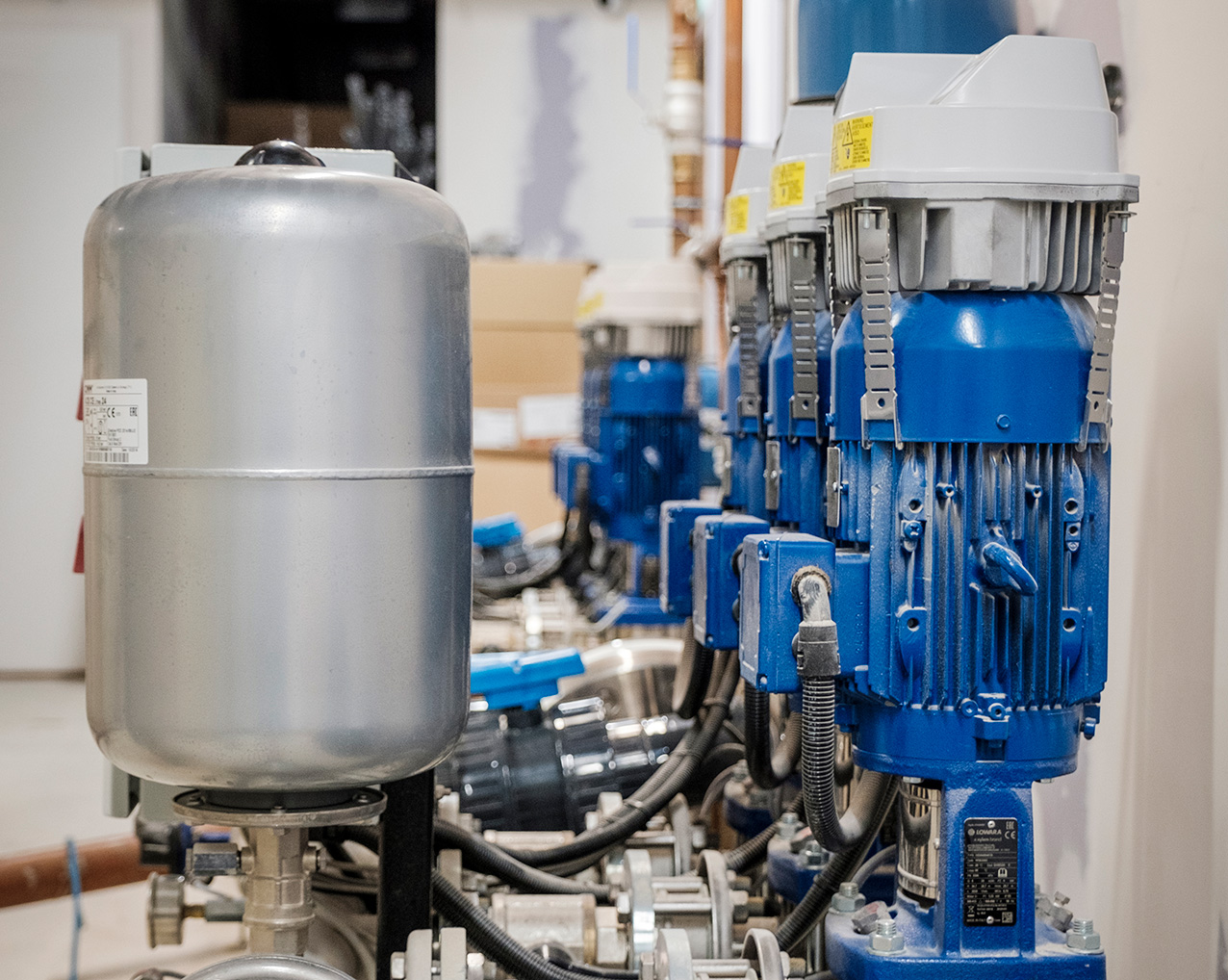
Benefits of a Booster Pumping System
If you are still struggling with water pressure, it is likely that you need to consider taking measures to increase the pressure of water to your system, this can be done very effectively with a booster pump.
Booster pumps are installed to increase the water pressure throughout a building and are an effective means of improvement in any type of building.
They can be installed in most properties whether you rely on a typical water supply or get your water from a private supply (such as a borehole or well).
A booster pump is a long term investment that will serve your property for years if properly maintained, download our free booster pump inspection checklist to find out more.
Booster pumps are available to suit any premises, whether it’s fixed speed or a range of multiple pump variable speed sets to meet demands and offer energy saving benefits.
Booster Pump Maintenance: Why It Matters
If you’ve already got a booster pump installed and you’re still experiencing low water pressure, the cause is very often poor or missed maintenance rather than the pump being undersized or unsuitable.
Like any mechanical system, booster pumps need regular attention to keep performing at the level they were designed for. Without it, common faults develop gradually — worn seals, failing sensors, clogged filters, or a control panel that’s no longer calibrated correctly — and pressure drops off long before the pump fails completely.
What’s typically included in a booster pump service:
- Inspection of pump components — seals, valves, bearings, and the motor — for wear or damage
- Testing of pressure sensors and control panel settings against the system’s intended operating pressure
- Checking the break tank, ball valve, and low-level protection are functioning correctly
- Identifying vibration, noise, or leaks before they develop into a larger fault
- Confirming the pump is still correctly sized for current building demand
How often should a booster pump be serviced?
Most commercial and residential booster sets benefit from a service at least once a year, though buildings with higher demand — such as hotels, leisure centres, or apartment blocks — may need more frequent visits. A planned maintenance contract takes the guesswork out of this by scheduling visits automatically and giving you priority access if something does go wrong between services.
Regular booster pump maintenance is also one of the most cost-effective ways to avoid a full pump failure, since most of the faults that lead to total breakdown are easy and inexpensive to catch early.
Download our free booster pump maintenance inspection checklist to see what should be checked between professional service visits, or find out more about our maintenance and repair service.
Frequently Asked Questions
Can changing a shower head improve water pressure?
Yes, in some cases simply changing the shower head can improve the water pressure you get.
Shower heads can also become blocked up with limescale which restricts the amount of water that can be output, so in some cases a simple clean will help improve the water pressure.
Additionally, some showers have water saving heads that intentionally reduce the water pressure to save money.
How to improve water pressure from a well?
If you rely on a well as your water supply, it’s critical that you get adequate pressure from your system given that there is no backup.
A booster pumping system can be used to effectively increase the pressure received from private domestic water sources.
Can I install a booster pump to the mains water pump?
Yes, a booster pump can be installed to the mains water pump.
However, due to water supply regulations, pumps that draw more than 12 litres of water per minute cannot be connected to a supply pipe without permission, therefore, it’s typically a better option to install a separate water tank for your booster pump.
It’s highly recommended that you engage with a booster pump installation company who will be able to recommend the best course of action based on your situation.
What does a booster pump service include?
A typical booster pump service involves a full inspection of the pump’s mechanical components, testing of pressure sensors and control settings, a check of the break tank and safety devices, and an assessment of whether the pump is still correctly sized for current demand. Our engineers will flag any developing issues and explain whether they need immediate attention or can be monitored.
How much does booster pump maintenance cost?
Costs vary depending on the size and complexity of the system, and whether you’re booking a one-off service or an ongoing maintenance contract. A maintenance contract is usually the most cost-effective option for buildings that rely heavily on consistent water pressure, since it includes scheduled visits and priority emergency cover. Call us on 0117 954 8030 for a tailored quote based on your system.
Talk to the Experts
We hope this post has given you some ideas on how to improve the water pressure at your premises, and how regular booster pump maintenance can stop the problem coming back.
If you’re still struggling with water pressure, or want to arrange a booster pump service or maintenance contract, talk to Mawdsleys Pumps today.
We’re experts in booster pumping systems and have installed and maintained units in locations including domestic properties, schools, hotels, and apartments, and regularly work with facilities management companies to keep booster systems performing well.
Call our expert team today on 0117 954 8030 or fill out a contact form and we’ll get back to you.
Get in touch with us so we can improve your water system efficiency and save you money
Why Water Pressure Matters
Low water pressure can create several issues in all environments, whether it’s a domestic premises, commercial office or leisure facility. The most common complaints about low water pressure include:
- Showers and taps can be reduced to a trickle of water
- Toilets may not flush properly
- Results in reduced efficiency in commercial premises
- Any activities requiring higher pressure, such as irrigation or high-pressure cleaning, may not be possible
- Certain modern appliances do not work below specific pressure thresholds
- Equally, certain pumping equipment requires a specific amount of pressure to work
All of this can contribute to a poor experience for the users of the building, and in a commercial building such as a block of flats, gyms, schools or a hotel, is likely to attract complaints.
What are the Causes of Low Water Pressure?
Water pressure is effectively the force that transports water through your pipes, so lower water pressure means that the water flows at a lower velocity.
There are a number of reasons why your water pressure may have dropped. The most common reasons for low water pressure are:
- When demand for water is higher, pressure may be impacted
- Properties that have a shared supply are more likely to experience issues with water pressure
- In larger buildings such as hotels, offices, or blocks of flats, water outlets at the top of the building tend to have lower pressure
- In gravity fed systems, your water pressure depends on how high the source of water is above your property
- Additionally, the distance your property is away from the water source will impact the pressure you get
- Old or damaged pumping facilities may no longer be able to cope with the demands of the building
- Pipes restricting the flow of water due to diameter, corrosion, blockages, and leaks can reduce the water pressure