
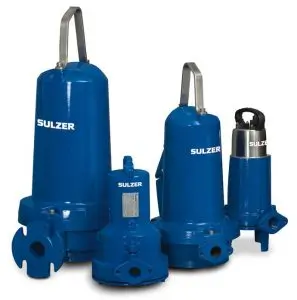
There’s nothing worse than a submersible pump failing on you. If it’s a submersible sewage pump, the first sign is often the electrics tripping on the control panel, or water backing up when you flush the toilet and not subsiding. In the worst cases, sewage can start overflowing from the manhole cover.
If it’s a sump pump, you might notice the electrics have tripped and the water level in the sump is rising. Where this is groundwater or flood water entering a basement, levels can rise quickly and cause serious property damage — which is why emergency sump pump repair is always treated as urgent.
The same general troubleshooting steps apply if you’re dealing with a submersible water pump that’s stopped delivering supply, though some of the specific checks below are written with sewage and sump pumps in mind.
Before calling for a submersible pump repair, here are five things worth checking yourself.
A note on safety: Submersible pumps are electrical equipment, often installed in confined spaces, sumps or manholes. If you’re in any doubt about your own safety — electrical, working at depth, or exposure to sewage — stop and call a professional. Some of the steps below should only be attempted if you’re confident and the size/weight of the pump allows.
 A note on safety: Submersible pumps are electrical equipment, often installed in confined spaces, sumps or manholes. If you’re in any doubt about your own safety — electrical, working at depth, or exposure to sewage — stop and call a professional. Some of the steps below should only be attempted if you’re confident and the size/weight of the pump allows.
1. Always isolate the electrical supply to the pump
If you are in any doubt, please phone a qualified Electrician for assistance.
2. Make sure the pump hasn’t tripped
Have a look at your control panel or fuse box to see if the supply to the pump has tripped. If it has, consider the following:
- Has there been a power cut? If yes, reset the trip switch.
- Has it been raining heavily? If yes, this puts the pump under increased load — it will need removing and checking rather than simply reset.
3. Is the Sump full of fibrous material and/or debris?
If yes – This could block impellor, causing the electrical supply to trip – the pump will need a visual inspection for blockages.
4. Is the equipment old and unmaintained?
If yes – Pump and associated equipment will need to be checked.
Only consider the following if the size and weight of the pump allows:
- Remove sump cover
- How is the pump mounted? Free standing on guide rail system? Only consider removing pump from sump if it is a free-standing system.
- Locate lifting chain and slowly raise pump from sump?
- Visually inspect for damage or blockages.
- Remove any visible material from impellor and outlet.
- Lower pump back into the sump, reset electrical supply, and test for free operation of equipment.
This is also a good moment to consider whether the pump is overdue a service — regular submersible pump maintenance catches wear like this before it causes a failure. Find out more about our maintenance contracts →
5. Check the level control floats are operational
- Can floats be attached to the pump or wired in separately?
- Is the pump running continuously or is it not running at all? Either way, lift float or pump and float from sump, clean off and give a quick shake to reactivate.
- If this does not work, the floats appear to have failed and will require replacement.
- Check floats are not stuck on pipework or debris, free up if necessary.
- If in doubt, call the experts for advice
What If It’s a Submersible Water Pump?
The same first checks apply if a submersible water pump — supplying water from a borehole, well, or clean water tank — has stopped working: isolate the supply safely, check whether the circuit has tripped, and look for an obvious blockage. The main difference is consequence rather than cause: a failed water pump usually means no water supply at all rather than a flood or backup risk, but it’s no less urgent for the property relying on it.
If checking the basics doesn’t restore your supply, the fault is likely internal to the pump or motor and will need a submersible water pump repair from an engineer.
Need a Hand?
Still Not Working? Time to Call an Engineer
If none of the above resolves the issue and your submersible pump still won’t start, it’s time to call in the experts before the problem gets worse. Mawdsleys provides submersible pump repair for sewage pumps, sump pumps and water pumps across Bristol, Bath, Cardiff and the wider South West and South Wales region — available 24/7, 365 days a year for emergency call-outs.
Call us on 0117 954 8030 or fill out our contact form and we’ll get back to you. Our engineers are happy to talk through what you’ve already checked and advise on next steps before attending site.
For more detail on the kinds of submersible pump faults we repair — including sewage, sump and water pump applications — visit our submersible pump repair page.