

Wastewater pumps — sometimes called dirty water pumps — are used wherever gravity alone can’t move water where it needs to go: pumping sewage into a main sewer, draining a commercial yard, transporting waste at a treatment plant, or managing dirty water and yard run-off on farms. The right pump for the job depends on the flow rate, pressure and distance the water needs to travel.
There’s never a convenient time for a wastewater pump to fail, but certain conditions make failure more likely. Heavy rainfall and falling leaves — most common in autumn — significantly increase the risk of blockages, while general wear over time affects seals, floats and electrical components year-round. Regular wastewater pump maintenance is the most effective way to prevent both.
This guide covers the most common problems we see in wastewater and sewage pumping systems, what causes them, and how a planned maintenance schedule prevents them from becoming costly breakdowns or emergency sewage pump repairs.
Common Problems with Wastewater Pumping Systems
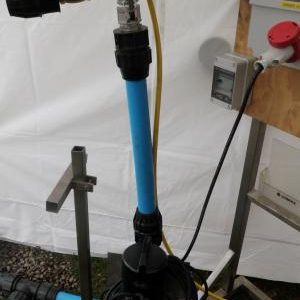
Pump Tripping the MCB (Miniature Circuit Breaker) This is often a sign that water has entered the pump’s motor winding. Heavy rainfall — more common in autumn than summer — increases the likelihood of this fault occurring. It can usually be resolved with a pump rewind; our dedicated rewind workshop in Bristol means we can have your pump back up and running quickly.
Phase Convertor Failure Over time, the phase convertor in a pump can fail, identifiable by underperformance or complete pump failure. We can overhaul your phase convertor at a fraction of the cost of full pump replacement.
Blockage by Rag This is one of the most common causes of failure in submersible wastewater and sewage pumps. In some cases it leads to complete stoppage, resulting in costly downtime and potential pump damage.
Floats Sticking Caused by grease build-up around the float switches. This can be reduced by fitting a grease trap, which separates fats and grease from wastewater before it reaches the pump.
Sump Pump Maintenance
Sump pumps are a specific type of wastewater/dirty water pump used to remove groundwater, flood water or surface water from basements, cellars and below-ground spaces. Many of the same faults covered above — float sticking, rag and debris blockages, electrical tripping — apply equally to sump pumps, but the consequences of failure are usually faster and more visible: a failed sump pump can let water levels in a basement rise within hours.
Regular sump pump maintenance should include float switch testing, a check of the non-return valve, a visual inspection for debris in the sump itself, and a test run to confirm the pump cuts in and out at the correct levels.
If you’re looking for sump pump maintenance near you, Mawdsleys covers Bristol, Bath, Cardiff, Gloucester, Exeter, Swindon, Southampton and the wider South West and South Wales region — call 0117 954 8030 to arrange a visit or discuss a maintenance contract. Find out more about basement and sump pumps →
Regular Pump Maintenance Plan
All of the issues above can be avoided with a maintenance plan, where every element of your wastewater pumping system is checked, maintained and any worn parts replaced before the pump actually fails. It’s always more cost-effective to prevent a pump failure than to wait for it to happen — not only do you avoid downtime, but you reduce the risk of consequential damage to the wider system, which is typically far more expensive than replacing a single worn part.
Early signs of potential pump or motor failure can be identified during routine maintenance visits. Mechanical seals and O-rings are checked as standard, and early detection prevents the kind of seal failure that leads to leaks, contamination risk and unplanned downtime.
A typical wastewater pump maintenance visit includes:
- Visual inspection of the pump, motor and chamber
- Float switch and level control testing
- Non-return valve check
- Motor insulation and current draw testing
- Mechanical seal and O-ring inspection
- Wet well or chamber cleaning where required
- Written condition report
What to Do If Your Wastewater Pump Has Already Failed
Sewage Pump Repair — What to Do If Prevention Comes Too Late
If your wastewater or sewage pump has already failed — tripping the electrics, backing up toilets, or showing signs of reduced output — maintenance advice won’t help you in the moment. At that point, you need a sewage pump repair, not a service plan.
Mawdsleys provides emergency sewage pump repair across Bristol and the South West, available 24/7, 365 days a year. Many faults — including the ones covered above — can be repaired on-site during a single visit. Where a pump needs full strip-down or motor rewinding, it’s taken to our Bristol workshop and returned ready for reinstallation.
Call 0117 954 8030 for immediate advice or to arrange a repair visit. Find out more about our sewage pump repair service →
Agricultural Dirty Water Pumping Systems for Farmers
Mawdsleys has worked with farmers across the South West for many years, and we understand the agricultural industry’s specific water disposal needs. Whether you’re managing yard run-off, slurry disposal or dirty water from livestock housing, we offer practical, cost-effective pumping solutions based on a site visit, a full survey, and a no-obligation quote.
Our dirty water pumping systems for agricultural use come with a 2-year guarantee and our standard 24-hour breakdown call-out service.
Our Dirty Water Disposal System
Our standard system uses a submersible macerator pump, incorporating a non-return valve and anti-siphon device – eliminating air-locking and pump cycling.
- A control system is provided and is monitored by a green bulkhead light which provides a visual indication that the system is ready for use.
- The pump delivers out to manually movable sprinklers, generally 2 or 4 dependant on your needs, with each discharge 36 LPM (500 GPH) at a radius of 15 metres (49 feet).
- The pump is generally installed on a fabricated steel base, supporting the pump in a position approximately 30 cm above the bottom of the pit providing a means of safely lifting the pump.
- Our pumps are constructed with standard components so that replacement items are readily available for immediate dispatch if required.
Talk To Our Expert Team Today
If you need advice on wastewater pump maintenance, a sewage pump repair, or sump pump maintenance near you, our team covers Bristol, Bath, Cardiff, Gloucester, Exeter, Swindon, Southampton, Dorset, Cornwall and the wider South West and South Wales region.
Whether you need a free, no-obligation quote, a one-off repair, or want to discuss an ongoing maintenance contract, call us on 0117 954 8030.