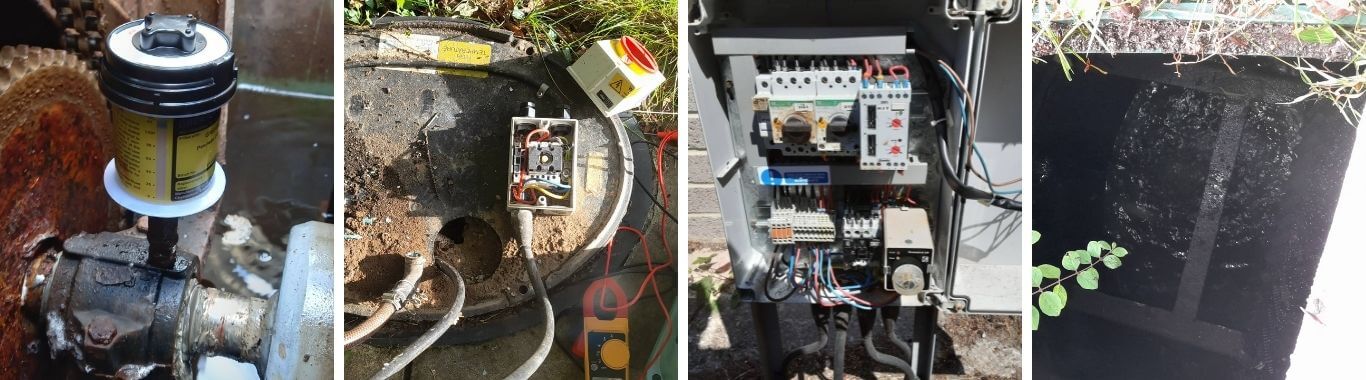
Every submersible pump must be serviced at least once a year. Pumps operating in harsh, high-demand, or critical environments — sewage, mining, dewatering, and industrial process applications — require more frequent submersible pump service, with quarterly or biannual checks as the minimum. It also depends on good housekeeping; if rags and fat often enter the sump, additional tinkering and servicing are required to avoid costly breakdowns. A pump that is never serviced is not a pump that is saving money. It is a pump that is accumulating for a future emergency.
Why Submersible Pump Maintenance Cannot Be Optional
A submersible pump operates in one of the most demanding environments of any mechanical equipment: fully submerged, often handling solids, abrasives, or chemicals, running continuously or cycling frequently, and — critically — out of sight. Unlike a surface-mounted machine, a submersible pump gives no visual warning when something is going wrong. By the time the failure becomes apparent, the damage is already done.
The submersible pumps market was valued at £274.74 million in the UK for 2025, reflecting the scale of dependency on these systems across residential, commercial, and industrial sectors(Grand View Horizon 2025). That dependency makes unplanned failure not just an inconvenience — it is a financial and operational event.
The case for regular submersible pump maintenance rests on three pillars: asset lifespan, energy efficiency, and — most critically — the prevention of costly unplanned downtime. Each is examined below.
The Financial Case for Regular Pump Maintenance
1. Extending Asset Lifespan
A well-maintained, high-quality submersible pump typically lasts 10 to 15 years. Some properly maintained systems exceed 20 years of service (Rafsun 2025). A neglected pump — one that never receives a professional pump service — will often fail within 5 years, sometimes far sooner in aggressive environments.
The arithmetic is straightforward. A commercial submersible sewage pump with a purchase and installation cost of £3,000–£8,000 that fails at year 5 due to lack of maintenance has an effective annual cost of £600–£1,600. The same pump, properly maintained for 15 years, delivers an effective annual cost of £200–£533 — a saving of 60–67% on the capital investment alone, before emergency labour costs are considered (Rafsun 2025).
Worn impellers reduce pump efficiency progressively over time. As the impeller degrades, energy consumption rises to maintain the same output — meaning an unmaintained pump is also an increasingly expensive pump to run, even before it fails.
2. Preventing Unplanned Downtime
The financial consequences of unplanned downtime in industrial and commercial settings are severe and well-documented:
- A 2023 survey by ABB, conducted across 3,215 plant maintenance decision-makers globally, found that unplanned outages cost the typical industrial business approximately £92,000 per hour (ABB 2023).
- The MaintainX 2024 State of Industrial Maintenance Report found that in 2024, the average cost of one hour of unplanned downtime hovers at around £20,000, rising to over £370,000 per hour for larger organisations (MaintainX 2024) .
- According to IDS-INDATA over 80% of industrial businesses experienced unplanned downtime in the last three years, with each incident lasting an average of four hours(IDS Indata 2025). UK manufacturers alone are estimated to lose around 49 hours per company per year to machine failures.
- Pumps & Systems confirmed in a 2024 study that 82% of companies experienced at least one unplanned downtime incident in the previous three years — most suffered two or more (Pumps & Systems 2025).
Even outside heavy industry, the consequences of pump failure are significant. A failed sewage pump in a hotel or block of flats triggers immediate health, safety, and regulatory obligations. A failed dewatering pump on a construction site can flood an excavation within hours, causing structural damage and delays costing tens of thousands of pounds.
The British Pump Manufacturers Association (BPMA) has long maintained that over the lifetime of a pump system, 85% of total costs are attributable to energy, 10% to maintenance, and just 5% to initial purchase price (BPMA 2022). Skipping the 10% maintenance spend does not eliminate costs — it transfers them to the 85% energy budget (through inefficiency) and creates emergency repair and downtime costs that dwarf the maintenance investment avoided.
3. Maintaining Energy Efficiency
A submersible pump with worn components — particularly a degraded impeller or a failing mechanical seal — works harder to deliver the same output, drawing more current and consuming more electricity. Atlantic Pumps notes that the cost of maintenance must be weighed against the cost of pump failure and also against the daily energy costs of running worn equipment: pumps operating at peak condition are significantly more cost-effective to run than those with heavily worn parts (Atlantic Pumps 2023).
In an era of elevated UK commercial energy tariffs, this is not a minor consideration. A pump consuming 10–15% more electricity than its rated efficiency due to worn internals represents a quantifiable, ongoing cost that a planned pump service would eliminate.
What a Professional Submersible Pump Service Includes
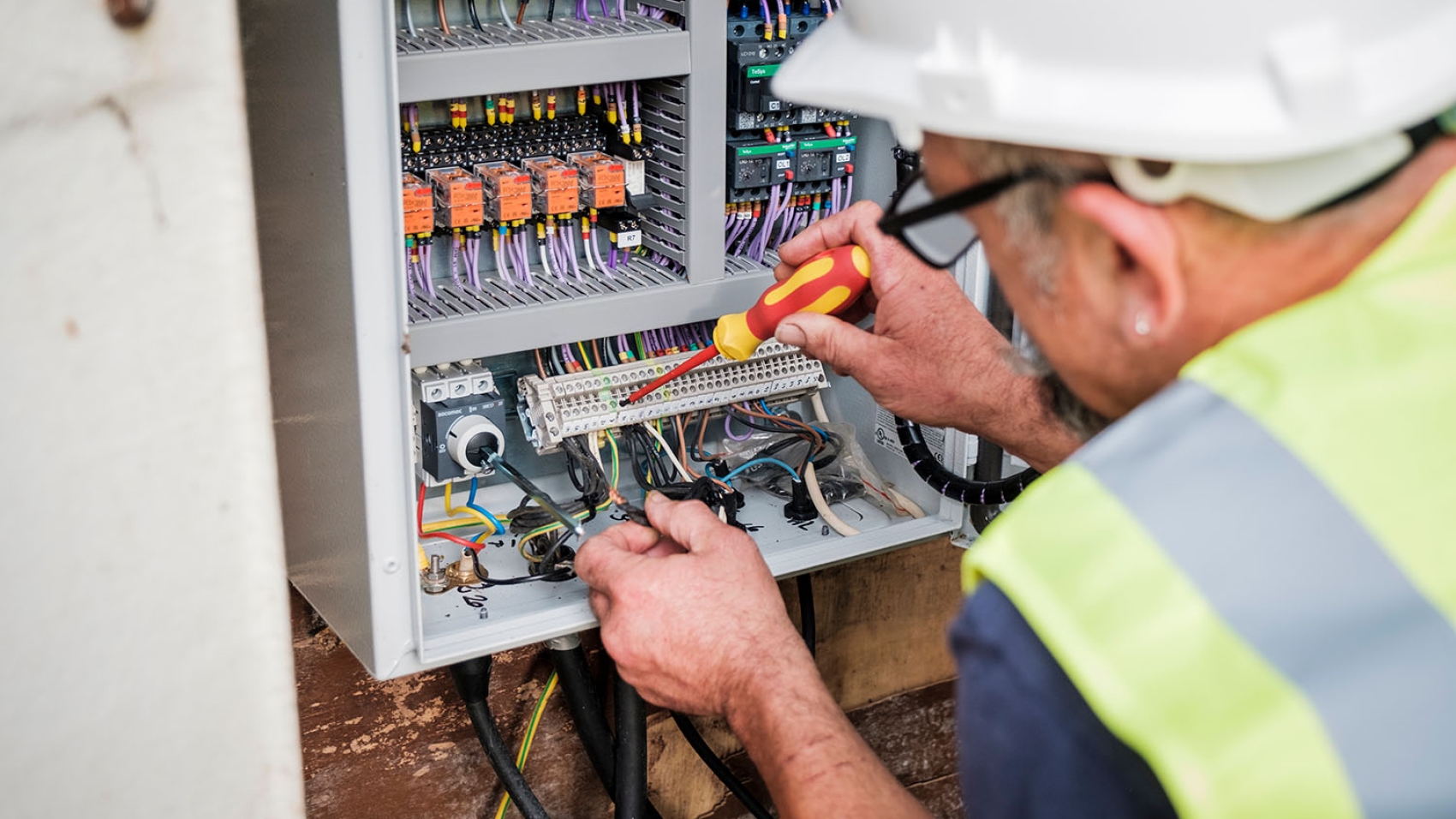
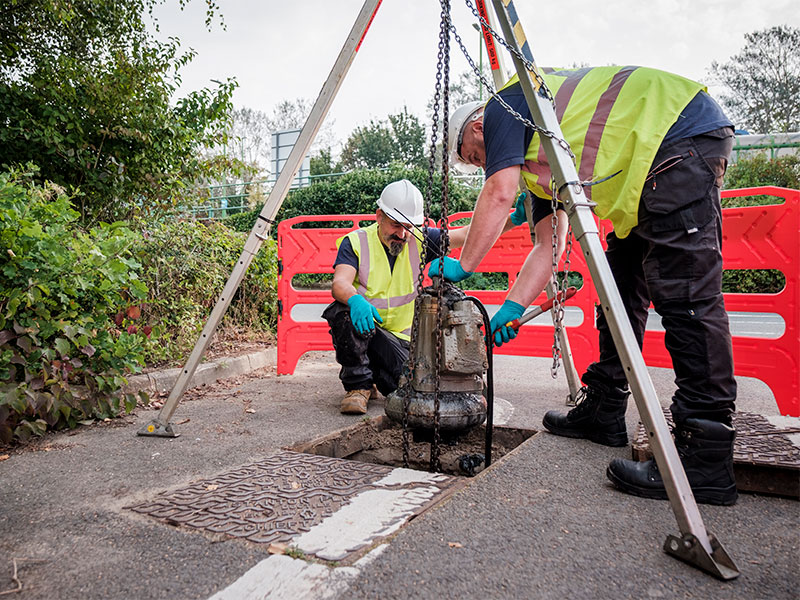
A professional submersible pump service is not simply a visual inspection. At Mawdsleys Pump Services, our engineers work through a detailed service checklist on every visit (Mawdsleys Pump Services — Maintenance & Repair), covering:
- Visual inspection — casing, cable entry, discharge pipework, and ancillary components for signs of corrosion, physical damage, or leakage
- Mechanical seal inspection — oil chamber sampling on oil-filled motors to check for milky oil indicating water ingress; seal face condition assessment
- Impeller check — inspection for wear, erosion, clogging, or cavitation damage
- Electrical testing — motor insulation resistance (megohmmeter test), current draw on each phase compared to baseline, and cable integrity checks
- Float switch or level sensor testing — operation at set points, freedom of movement, and freedom from debris interference
- Discharge and non-return valve check — valve seating, debris, and correct operation
- Vibration and noise assessment — listening and measuring for bearing wear, impeller imbalance, or cavitation indicators
- Control panel review — fault history, overload settings, duty/standby rotation, and alarm test
- Performance test — flow rate and head readings compared against the commissioning baseline to identify efficiency degradation
- Full written service report — with photographic evidence, findings, and recommended actions
How Often Should Each Type of Submersible Pump Be Serviced?
Service frequency is not one-size-fits-all. It is determined by pump type, operating environment, fluid handled, duty cycle, and criticality of the application. The table below sets out the recommended submersible pump maintenance intervals for each major pump type.
Pump Type | Typical Application | Operating Conditions | Recommended Service Interval | Key Maintenance Priorities |
Submersible Sewage Pump | Hotels, blocks of flats, commercial buildings, municipal lift stations | Continuous duty; handles solids and organic matter; high cycle frequency | Every 6 months (biannual); critical installations quarterly | Impeller/grinder condition, seal integrity, non-return valve, float switch, cable |
Submersible Drainage / Sump Pump | Basements, cellars, car parks, plant rooms, commercial buildings | Intermittent; clean to mildly contaminated water | Annually (minimum); test biannually | Float switch, discharge pipe, check valve, battery backup test |
Submersible Borehole / Well Pump | Water supply, irrigation, groundwater abstraction | Continuous or on-demand; deep installation; often hard or mineralised water | Annually (minimum); water quality check every 6 months | Motor insulation, impeller wear, rising main integrity, pressure switch |
Submersible Dewatering Pump | Construction sites, mining, tunnelling, flood response | Intermittent to continuous; abrasive, solids-laden fluid; harsh environment | Before and after each deployment; every 3 months on permanent installations | Impeller wear, seal condition, intake screen, cable and connector integrity |
Submersible Slurry Pump | Mining, dredging, quarrying, industrial sludge | Continuous; highly abrasive fluid; high wear rate on components | Every 3 months (quarterly); wear parts inspection monthly | Wear plate and impeller thickness, seal condition, agitator, discharge pipe erosion |
Submersible Sewage Grinder Pump | Low-pressure sewer systems, below-drain-level basements | Continuous; solid waste including fibrous material; high mechanical stress | Every 6 months; grinder blade inspection quarterly | Grinder blade sharpness, seal integrity, motor current draw, non-return valve |
Submersible Stormwater Pump | Surface water drainage, flood risk management, highway drainage | Seasonal or event-driven; can sit idle for months then run continuously | Pre-season inspection (annually minimum); test run quarterly | Float/sensor operation, impeller debris clearance, discharge condition, electrical test |
Submersible Process Pump (Industrial) | Chemical processing, food and beverage, oil and gas | Continuous; potentially corrosive, viscous, or high-temperature fluids | Every 3–6 months depending on fluid aggressiveness | Seal material compatibility, motor insulation, impeller and casing corrosion, flow performance |
Notes on the table:
- “Annually” means a full professional pump service including disassembly, inspection, and performance test — not a visual check.
- “Test biannually” means a functional test (run the pump, verify activation, check discharge) without full disassembly.
- Manufacturer service requirements must always be observed as a minimum. Where a manufacturer specifies more frequent service intervals than those above, the manufacturer’s schedule takes precedence.
- Pumps operating in duty/standby pairs must have standby units exercised regularly — typically monthly — to prevent stagnation and ensure readiness.
The Cost of Reactive vs. Planned Pump Maintenance
The industry term for waiting until a pump fails before servicing it is “run-to-failure” — or reactive maintenance. Despite the evidence against it, MaintainX’s 2024 report found that 57% of facilities still rely on some form of run-to-failure maintenance(MaintainX 2024).
The cost difference between reactive and planned pump maintenance is stark:
- Emergency callout labour typically commands a premium of 50–100% over standard planned visit rates, particularly for out-of-hours attendance.
- Emergency parts — sourced urgently rather than from stock — carry significant surcharges and can involve lead times that extend downtime by days.
- Consequential damage — a failed mechanical seal that goes undetected floods the motor; a clogged impeller that causes overheating burns out the windings. What would have been a £200 seal replacement becomes a £2,000–£5,000 motor rewind or full pump replacement.
- Downtime costs — the operational cost of downtime consistently dwarfs the cost of the maintenance that would have prevented it.
65% of companies now use a computerised maintenance management system (CMMS) to manage maintenance activities, reflecting a clear industry shift toward planned, proactive pump service regimes (MaintainX 2024).
How Mawdsleys Pump Services Can Help
At Mawdsleys Pump Services, we specialise in submersible pumps across every application — sewage, borehole, well, stormwater, and industrial process. Our submersible pump service contracts are structured around your specific pump type, operating conditions, and criticality requirements — not a generic annual-visit template.
Submersible Pump Maintenance Contracts — We offer annual, biannual, and quarterly pump maintenance contracts with agreed response times for emergency callouts outside scheduled visits. Every service visit produces a full written report with photographic evidence, giving you documented proof of compliance and a clear record of your asset’s condition.
24/7 Emergency Submersible Pump Repair — When a pump fails outside scheduled maintenance, our engineers are available 24 hours a day, 365 days a year. We carry common wear parts — mechanical seals, impellers, float switches, and bearings — for all major brands to maximise first-visit resolution.
Our Google Reviews reflect what our customers tell us consistently: rapid attendance, precise communication, and work completed right the first time.
How often should a submersible pump be serviced?
At minimum, every submersible pump must receive a full professional submersible pump service once per year. Pumps handling sewage, abrasive slurry, or operating in continuous-duty industrial environments typically require biannual or quarterly service. The correct interval depends on the pump type, fluid handled, and duty cycle and housekeeping— the table in this article provides type-specific guidance.
What happens if I don't service my submersible pump?
An unserviced pump will degrade progressively. Wear on the impeller reduces efficiency and increases energy consumption. Mechanical seal deterioration eventually allows water ingress into the motor. Debris accumulation on the float switch causes unreliable activation. Left unaddressed, these issues compound into motor failure — converting what would have been a routine pump service cost into a full pump replacement and, potentially, significant damage to the property the pump was protecting.
What is the lifespan of a submersible pump?
A properly maintained, high-quality submersible pump typically lasts 10 to 15 years, with some exceeding 20 years in optimal conditions. Without maintenance, 5 years or less is a realistic expectation in demanding applications. The difference is a direct result of planned submersible pump maintenance.
Is a pump service contract worth the cost?
Yes, in almost every commercial or industrial application. A planned pump maintenance contract fixes your service costs at a predictable annual figure, eliminates emergency premium callout charges, extends asset life, and protects against the consequential costs of downtime. For any pump that is critical to building operations — sewage, drainage, water supply — a service contract is not a discretionary spend; it is risk management.
Can I carry out submersible pump maintenance myself?
Basic checks — listening for unusual noise, monitoring current draw, verifying float switch operation — can be carried out by a trained operator. However, a full submersible pump service requires a megohmmeter for motor insulation testing, specialist knowledge to interpret oil chamber samples for seal condition, and calibrated equipment to compare flow and pressure performance against baseline. It must be carried out by a qualified engineer.
How do I know if my submersible pump needs servicing now, outside of a scheduled visit?
Warning signs requiring immediate pump service assessment include: reduced flow or pressure at the discharge point; unusual grinding, rattling, or humming during operation; increased current draw noted on the control panel; tripped overloads or repeated faults on the control panel; water around the pump housing or wet well; and activation delays or continuous running that deviates from the normal cycle. Any one of these signals warrants prompt attention — do not wait for the scheduled service date.
Do standby pumps in a duty/standby installation still need servicing?
Yes. A standby pump that sits idle but is never tested or serviced is a pump that will fail the moment it is needed. Standby units must be exercised — run under load — at least monthly to prevent bearing stagnation and verify operational readiness. They require the same annual full submersible pump service as duty units.
Booster Pump FAQs
References
Grand View Horizon, 2025, UK Electric Submersible Pump Market Size & Outlook, https://www.grandviewresearch.com/horizon/outlook/electric-submersible-pump-market/uk
Rafsun, 2025, How many years does a submersible pump last?, https://www.rafsun.com/how-many-years-does-a-submersible-pump-last/,
ABB, 2023, ABB survey reveals unplanned downtime costs $125,000 per hour, https://new.abb.com/news/detail/107660/abb-survey-reveals-unplanned-downtime-costs-125-000-per-hour
MaintainX 2024, The State of Industrial Maintenance 2024, https://software.getmaintainx.com/hubfs/State%20of%20Industrial%20Maintenance%202024/2024%20State%20of%20Industrial%20Maintenance%20Report.pdf
IDS Indata, 2025, The Real Cost of Downtime in Manufacturing: Sector-by-Sector Breakdown and 2025 Forecasting, https://idsindata.co.uk/manufacturing-downtime-costs-and-forecasting/
Pumps & Systems, 2025, Preventative & Predictive Maintenance Reduces Unplanned Downtime, https://www.pumpsandsystems.com/article/preventative-predictive-maintenance-reduces-unplanned-downtime/
BPMA, 2022, Optimising pump systems to save electrical energy, https://www.bpma.org.uk/news-article/638888250dba6/Optimising-pump-systems-to-save-electrical-energy
Atlantic Pumps, 2023, Your Essential Guide to Submersible Pump Maintenance, https://atlanticpumps.co.uk/blogs/submersible-pump-maintenance/





 With summer coming to an end, the new term is looming for