

If you’re a facilities manager, public building owner or a tenant living within an apartment or block of flats; you will understand the vital role an efficient booster pumping system plays – providing water of sufficient pressure to every water point within the building.
However, one of the main reasons we are called out to attend booster pumping systems is due to noise coming from the system, attracting complaints from residents who may have been woken in the early hours of the morning by the pump.
In our latest blog post, we’ll cover off reasons why booster pumps make noise, how you can control it and essential regular maintenance checks you can carry out to ensure your pumping system runs efficiently without generating excessive noise.
Why Do Booster Pumping Systems Make Noise?
The key reasons booster pumps make noise are:
- Higher water demand than the pump can facilitate.
- Pump positioned incorrectly.
- Worn components such as bearings.
- Old or unmaintained pump.
- Excessive vibration from the pump.
- Excessive vibration from pipework within the building.
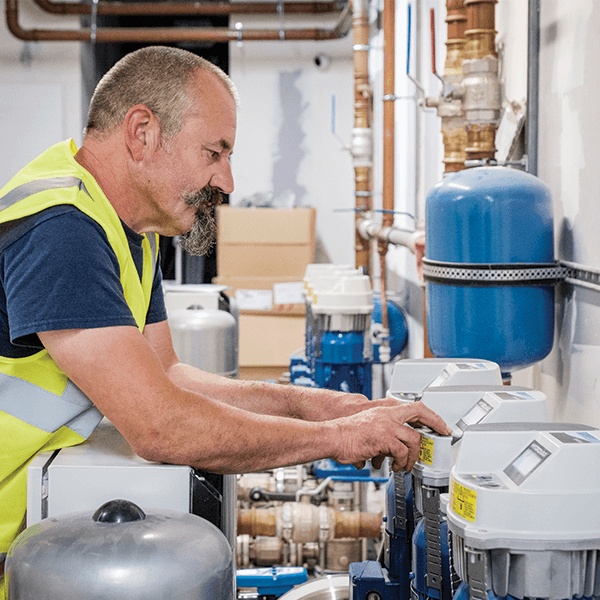
How Can I Stop My Booster Pumping System Making Noise?
With a few controls and proper maintenance, noise from booster pumps can be adequately controlled without impacting on the performance of the system:
Use the Right Pump for the job
Using the right tool for the job is key to achieving any task, and it’s the same with your pumping system. In older buildings, we often find that older and inefficient systems are being used to boost water pressure.
Not only does this mean lower efficiency and higher bills, but during times when everyone in the facility is using water, such as the morning shower, all pumps in the booster set are needed to provide adequate water, creating excessive noise.
In an efficient system that’s tailored to building requirements, the whole bank of boosters would never need to run simultaneously to supply the amount of water required.
Position the Pump Correctly
Following the selection of the most suitable pump for the job, the location of the pump is essential for achieving zero sound disruption for building users. In most cases, we recommend that the pump be installed in an enclosed space such as a soundproofed control room.
If your pump is already set in place and relocation would be impractical and expensive, it is still possible to erect a control room or sound barrier around the pump to reduce noise.
Note that regardless of your pump positioning, if you are using an inadequate system, complete cancellation of noise will be difficult to achieve.
Use Vibration Isolators
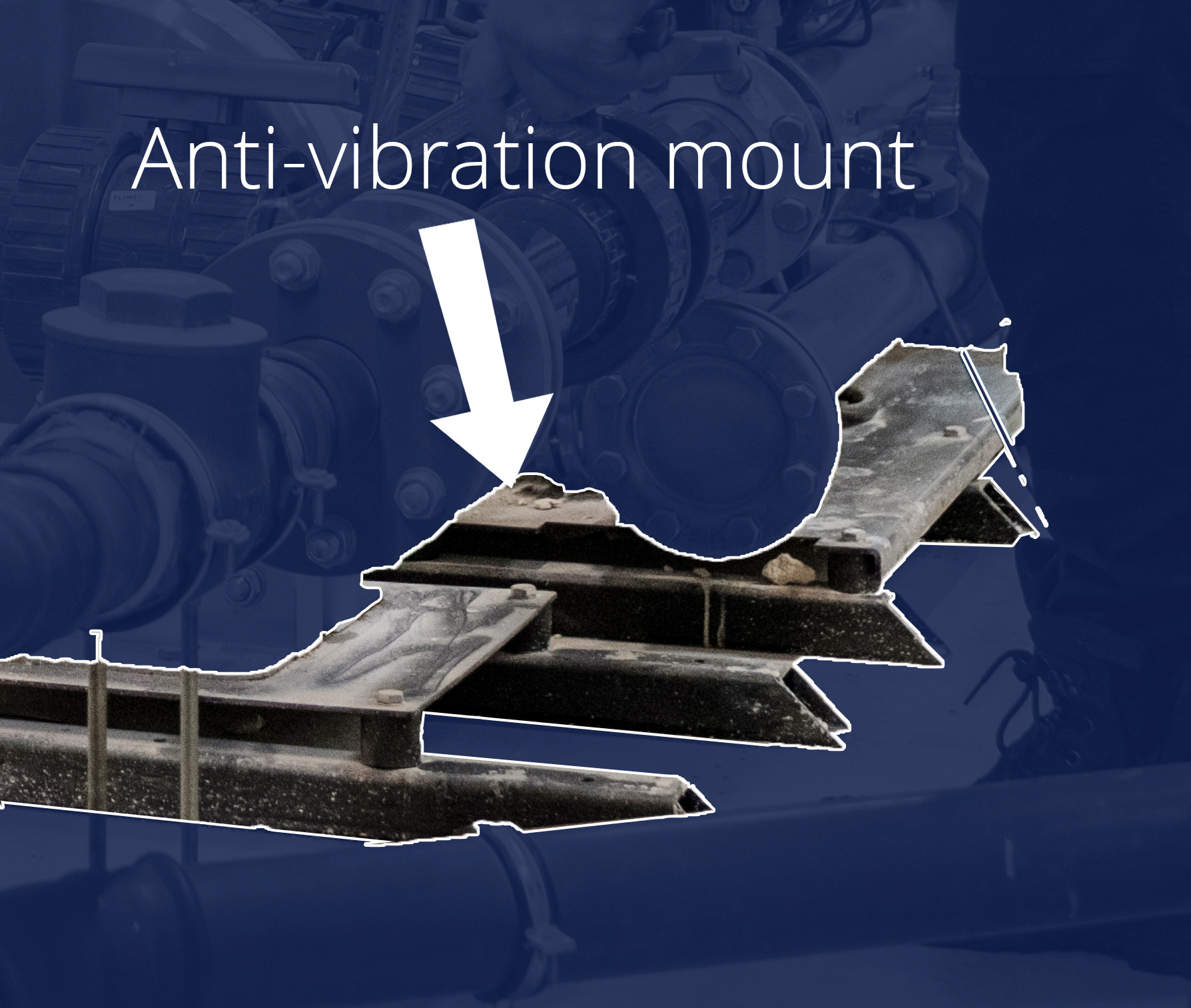
One of the most common causes of noise from booster pumps is vibrations; these vibrations generally come from the pipes or the pumping system itself vibrating against the structure of the building.
Using vibration isolators is a cost-effective way of reducing noise from your pump – the most effective method will depend on the level of vibrations your system is producing:
Low Level of Vibration – If your pumping system is producing a low level of noise and vibration, a vibration mat is a simple and cost-effective method of control. This is essentially a thick mat or pad on which the pump is placed to prevent vibrations from being carried up the building.
Mid Level Vibration – If your pumping system is producing a medium level of noise and vibration, vibration springs or mounts can be fitted, which absorb the vibrations coming from the pump.
High Level of Vibration – If your pump is producing a high level of vibrations, an inertia base can be constructed – this is a robust measure that will absorb the maximum amount of vibration.
Vibrations Coming from Pipework – If you find that the vibrations are coming from your pipes as opposed to your pump – fitting vibration isolators such as springs to pipework will prevent them from vibrating against the building.
If you find your pump is vibrating excessively or the vibrations are getting worse over time, call a specialist to come and inspect – it could be that vital components within your pump have become damaged.
Ensure Pump is Properly Maintained
As pumping systems age, vital components such as bearings wear down – creating unwanted noise. It is essential that these components are regularly inspected and replaced as required to prevent noise and further damage to the system.
Putting a proper pump maintenance plan in place is the most effective and cost efficient way of controlling noise and preventing failure within your system.
Essential Maintenance Checklist for Booster Pumping Systems
If you’re responsible for a booster pumping system, regular checks are the most effective way to catch noise-causing faults before they develop into something more serious — or before a full pressure pump failure.
What you can check yourself, weekly
A basic in-house visual inspection should cover:
- Check all valves for free travel
- Check water and air pressure gauges
- Test the alarm
- Inspect bearings and lubricate as required
- Check for any damage to the pump or its main components
- Note any unusual noises or “struggling” from the system during start-up
- Note any excessive vibration or unusual noise from the pump
- Note the temperature within the plant room
To help keep on top of routine checks, download our free booster pump maintenance inspection checklist.
What a professional booster pump service includes
Weekly visual checks are useful, but they’re not a substitute for a full professional service. A booster pump service typically goes further than an in-house inspection and includes:
- A detailed mechanical inspection of pumps, bearings, seals, and valves
- Testing and calibration of pressure sensors and control panel settings
- Identifying early signs of wear that a visual check alone wouldn’t catch
- Servicing or replacing worn components such as bearings before they fail
- A written report confirming the system’s condition and any recommended work
Most commercial booster pumping systems should have a professional service at least once a year, with more frequent visits recommended for buildings with higher demand, such as apartment blocks, hotels, or leisure centres. A planned maintenance contract takes care of this automatically and gives you priority access to support if a fault does develop between visits.
Find out more about our booster pump maintenance and service plans.
Ensure Pump is Properly Maintained
As pumping systems age, vital components such as bearings wear down – creating unwanted noise. It is essential that these components are regularly inspected and replaced as required to prevent noise and further damage to the system.
Putting a proper pump maintenance plan in place is the most effective and cost efficient way of controlling noise and preventing failure within your system.
Nationwide Booster Pump Installation, Repair and Maintenance
At Mawdsleys Pumps, we provide an all-encompassing service for the design, installation, ongoing maintenance, and emergency repair of booster pumping systems. We can also help resolve booster systems that are creating excessive noise, whether the cause is a maintenance issue, an undersized pump, or poor positioning.
Whether you’re considering a new booster pumping installation, need a one-off service, or want to set up an ongoing maintenance plan, we can help. Call us today on 0117 954 8030 or fill out the form below and one of our team will get back to you.
Booster Pump Maintenance and Service FAQs
Most commercial booster pumping systems benefit from a professional service at least once a year. Buildings with higher water demand, such as hotels, apartment blocks, or leisure centres, may need more frequent visits. Weekly in-house visual checks should be carried out in addition to, not instead of, a professional service.
In-house checks are visual — looking for obvious damage, noise, vibration, or pressure issues. A professional service goes further, including hands-on inspection of internal components, calibration of sensors and controls, and replacement of worn parts before they cause a failure. The two work together: regular in-house checks catch obvious problems early, while a professional service catches the issues you can’t see.
Yes — it’s one of the most common causes. As components like bearings wear down without being serviced, they generate noise that gets progressively worse. A proper maintenance plan is usually the most cost-effective way to control noise and prevent the fault from becoming a full pump failure.
This depends on the size and complexity of your system and whether you’re booking a one-off visit or an ongoing maintenance contract. A maintenance contract is usually more cost-effective for buildings that depend on consistent water pressure, since it includes scheduled visits and priority support. Call us on 0117 954 8030 for a tailored quote.


 With summer coming to an end, the new term is looming for
 In the Rail Industry, it is imperative that vital components such as pumps are kept in good working order to ensure the line remains operational.