A sewage pump failure is never convenient — but it’s almost always preventable. Whether you manage a commercial premises, a residential property or a pumping station, planned sewage pump maintenance is the most reliable way to avoid unexpected breakdowns, protect your equipment and control costs.
This guide explains what good sewage pump maintenance involves, the most common faults that a service visit will catch early, and what to do if your pump develops a problem that needs repair. We also cover why winter is the most critical time to have your system checked — and why Mawdsleys is one of the few pump specialists that keeps operating through the Christmas and New Year period.
Need help now? Call 0117 954 8030 — we operate 24/7, 365 days a year.
What Does Sewage Pump Maintenance Visit Include?
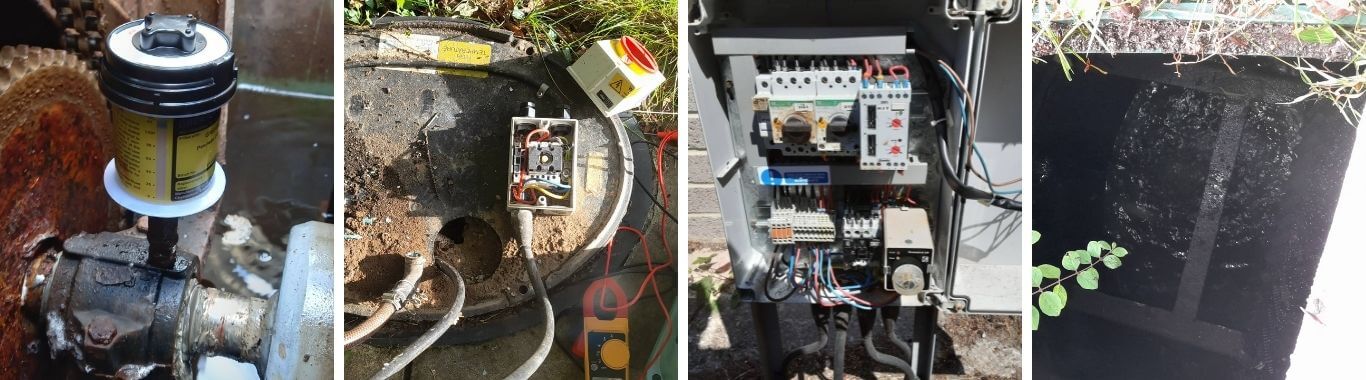
A thorough sewage pump maintenance visit goes well beyond a visual once-over. Our engineers carry out a structured inspection that covers every component likely to cause a failure, including:
- Float switch and level controls — the most common cause of pump faults. Tested for correct operation and adjusted or replaced as needed.
- Non-return valve condition — a failed valve causes sewage to recirculate within the sump, increasing motor load and wear.
- Motor insulation and current draw — an early indicator of winding deterioration before full motor failure occurs.
- Pipework and chamber integrity — checking for cracks, perished seals and corrosion that could lead to leaks.
- Wet well cleaning and de-ragging — removing rag, debris and silt buildup that impairs pump performance.
- Control panel and alarm testing — verifying that high-level alarms and auto-start functions are operating correctly.
- Written condition report — a record of findings, any work carried out, and recommendations for the next visit.
Each visit gives you a clear picture of your pump’s condition and flags any developing issues before they become expensive problems.
Common Sewage Pump Problems That Maintenance Prevents
The following faults are among the most frequent reasons we’re called out for emergency sewage pump repair. In most cases, a scheduled maintenance visit would have identified the warning signs first:
Pump not starting. Caused by float faults, a jammed impeller, blocked electrics or motor failure. Our engineers test starting performance on every visit and can spot a weakening motor before it fails completely.
Pump running continuously Usually, a float switch is stuck in the on position, or a blockage prevents the sump level from dropping. Left unattended, the pump runs dry and destroys its seals — turning a simple adjustment into a full sewage pump repair.
Toilets are backing up. Often a downstream blockage or a pump is already working at reduced capacity. Routine maintenance checks flow rates and identifies partial blockages before they cause a full backup.
Leaking pipework or failed non-return valves. Seal and valve degradation is gradual and easy to catch on a maintenance visit. Once a seal fails and sewage begins to leak, it becomes an urgent emergency with potential health and compliance implications.
High-level alarm activating indicates the pump is failing to keep pace with inflow. Maintenance visits test alarm function and verify the pump is handling its design load — preventing the conditions that trigger high-level events.
Bad odours caused by perished chamber lid seals or vent pipe damage. Identified and resolved during a routine service visit before odours became a complaint from building users.
For a deeper look at each of these faults and what causes them, see our guide: 8 Common Problems with Sewage Pumps and How to Fix Them.

Sewage Treatment Plants Undergoing Maintenance
Why Winter Makes Sewage Pump Servicing More Important?
Cold weather puts additional stress on sewage pump systems in several ways:
- Freezing temperatures can affect above-ground pipework, vent pipes and any exposed electrical components, particularly on external or partially exposed installations.
- Increased usage over the Christmas and New Year period — more people in buildings, hospitality venues running at full capacity — means pumps are working harder precisely when an engineer is hardest to reach.
- Holiday shutdowns mean that if a fault develops over Christmas, the impact can go undetected for days, turning a minor fault into significant damage or a sewage overflow.
Arranging a pre-winter sewage pump maintenance visit — ideally in October or November — ensures your system is in the best possible condition before peak demand and cold snaps arrive.
Mawdsleys is one of the few pump specialists that continues operating throughout Christmas and the New Year. Our engineers are available for emergency call-out 24/7, including bank holidays, so if something does go wrong over the festive period, you’re not left waiting.
The Benefits of a Planned Sewage Pump Servicing Contract
For commercial and industrial sites where sewage pumps are business-critical, a servicing contract offers more than just scheduled visits. Our contract clients benefit from:
- Priority response times when breakdowns do occur, ahead of non-contract call-outs
- Discounted repair rates on parts and labour for any work arising from a service visit
- Full service history maintained against each asset — useful for compliance, insurance and handover purposes
- Annual condition reporting to support planned budgeting and capital replacement planning
- A direct line to a named engineer who knows your site and its equipment
Contracts are tailored to your site and budget — whether you need one visit a year for a single residential pump or quarterly visits across a multi-site estate.
Find out more about our sewage pump servicing contracts →
Why Choose Mawdsleys for Sewage Pump Maintenance and Repair?
- 30+ years of experience carrying out sewage pump maintenance, repair and servicing across the South West and South Wales
- In-house engineers — no subcontracting. Our own team carries out every job, which keeps quality consistent and pricing competitive
- Fully equipped workshop in Bristol for pump refurbishment and overhaul when site repair isn’t possible
- Confined Space Accredited engineers for work in chambers, wet wells and below-ground installations
- 24/7 emergency cover, 365 days a year, including Christmas and bank holidays
- Trusted by councils and large organisations, including Bristol City Council, North Somerset Council and the Wildfowl & Wetlands Trust

Book a Sewage Pump Maintenance Visit or Service Review
Whether you need a one-off maintenance visit, emergency sewage pump repair, or want to talk through a servicing contract for your site, our team is ready to help.
Call us on 0117 954 8030 or fill in the contact form below. We’ll discuss your requirements and recommend the right approach for your pump and your budget.


 With summer just around the corner, there isn’t a better time to consider the health of your pitch in time for next season or to use for training. Dry, hard and withered pitches, playing fields and courses can cause serious problems for the players, groundskeepers and managers of the club – and be a constant source of embarrassment.